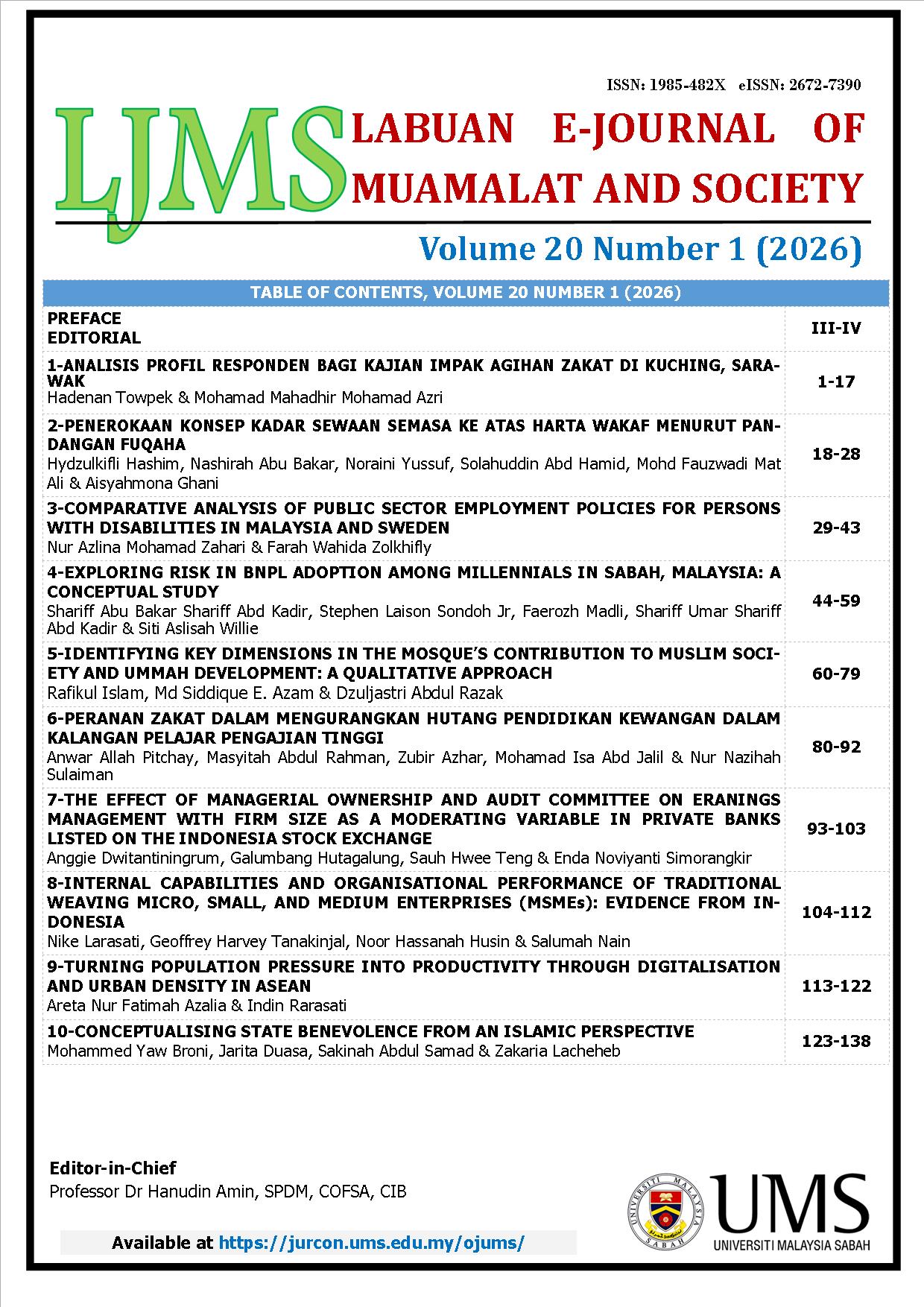
PERANAN ZAKAT DALAM MENGURANGKAN HUTANG PENDIDIKAN KEWANGAN DALAM KALANGAN PELAJAR PENGAJIAN TINGGI
DOI:
https://doi.org/10.51200/ljms.v20i1.7067Keywords:
Zakat, Maqasid Syariah, Financial assistance, Hybrid instrumentAbstract
This paper introduces an alternative model perspective for the National Higher Education Fund (NEFC) financing system. The main objective of this alternative model, known as the Zakat model, is to alleviate and exempt NEFC loan repayments for Asnaf students through the use of Zakat funds, in line with the broader goal of poverty eradication. A large proportion of borrowers, over half a million, have yet to repay any portion of their student loans, with nearly 97 per cent belonging to the B40 student demographic. Given the potential impact of debt on individuals and their families, it is important to explore avenues for debt relief. This paper focuses on conceptual development of a Zakat model, using a qualitative content analysis methodology. This study draws on existing research on the effectiveness of Zakat as an important form of assistance in the education sector, thereby establishing the Zakat model as an innovative financing paradigm. The proposed approach is highly relevant to addressing the issue of rising student debt, especially among B40 students who are heavily reliant on loans to finance their education. The Zakat model proposes a mechanism whereby Zakat funds contribute by deducting tuition and accommodation fees financed by NEFC loans. This intervention aims to ease the financial burden on students and their families, allowing them to focus on academic pursuits and achieve their educational aspirations. In essence, this new approach to zakat distribution has the potential to create a more sustainable and impactful form of charitable giving. In doing so, it can effectively contribute to addressing critical social challenges, including poverty, inequality, and access to education.
Downloads
Published
How to Cite
Issue
Section
License
Copyright (c) 2026 Labuan e-Journal of Muamalat and Society (LJMS)

This work is licensed under a Creative Commons Attribution 4.0 International License.




 Total Views: 220
|
Total Views: 220
|  Total Downloads: 164