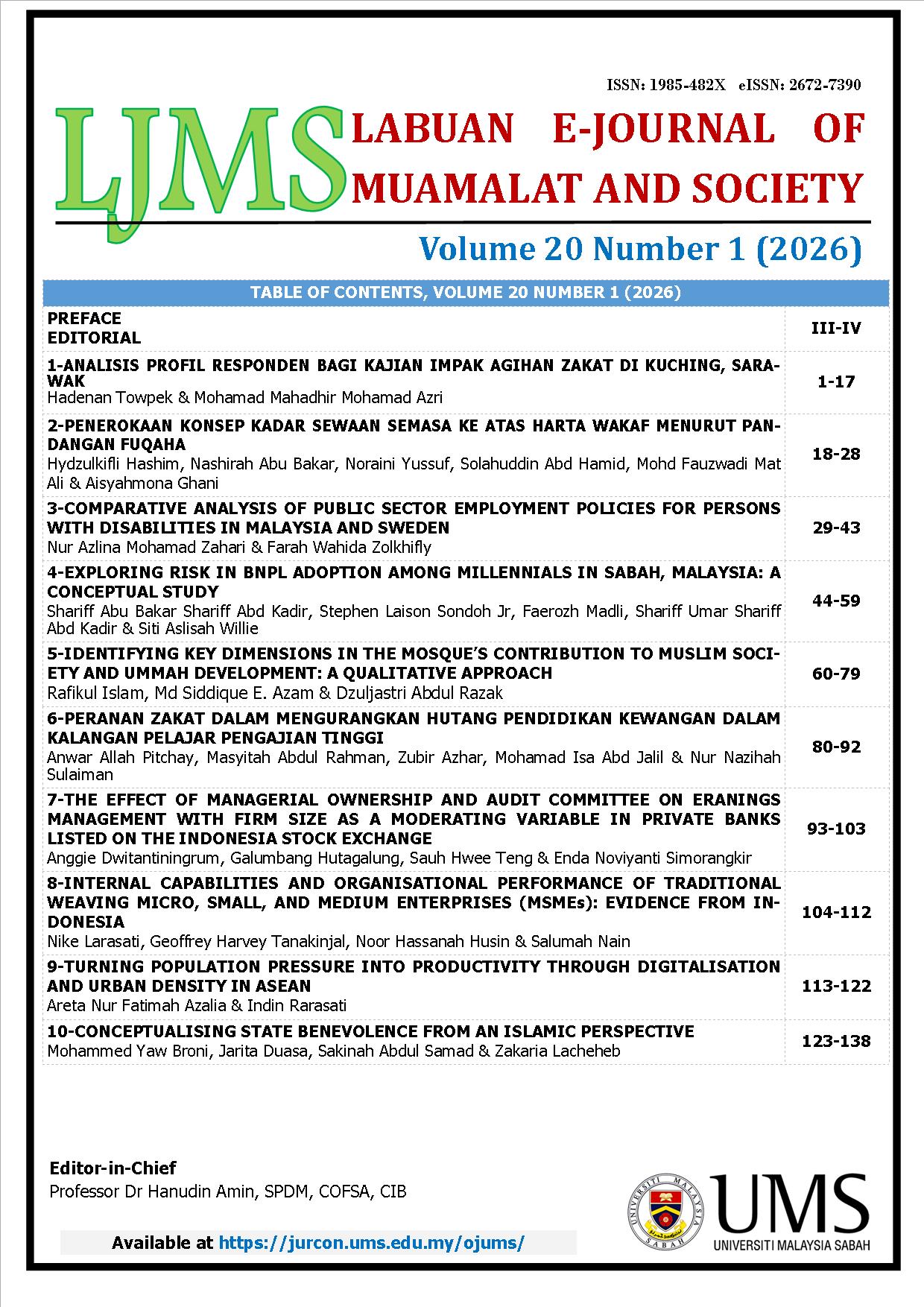
COMPARATIVE ANALYSIS OF PUBLIC SECTOR EMPLOYMENT POLICIES FOR PERSONS WITH DISABILITIES IN MALAYSIA AND SWEDEN
DOI:
https://doi.org/10.51200/ljms.v20i1.6816Keywords:
Disability, Public sector, Inclusivity, Employment, Persons with disabilitiesAbstract
This article presents a comparative analysis of public sector employment policies for persons with disabilities in Malaysia and Sweden, with the objective of identifying key differences, challenges and best practices that influence inclusive employment outcomes. Using a qualitative comparative methodology, the article examines policy documents, legislation and statistical reports from both countries to assess how legal frameworks and implementation strategies impact the inclusion of persons with disabilities in public employment. The findings reveal that while Malaysia has established legal provisions such as employment quotas and accessibility standards, significant barriers remain due to limited enforcement, negative societal attitudes and insufficient support services. In contrast, Sweden demonstrates a more comprehensive and proactive approach, supported by strong anti-discrimination laws, accessibility measures and employer incentives, resulting in higher employment rates for persons with disabilities. The analysis highlights the role of cultural perceptions, legal structures and social support systems in shaping policy effectiveness. The article concludes that Malaysia can enhance its public sector inclusion by adopting stronger enforcement mechanisms, fostering attitudinal change and drawing on Sweden’s integrated policy approach. Promoting meaningful employment for persons with disabilities is essential for achieving equitable societies and strengthening public sector diversity.
Downloads
Published
How to Cite
Issue
Section
License
Copyright (c) 2026 Labuan e-Journal of Muamalat and Society (LJMS)

This work is licensed under a Creative Commons Attribution 4.0 International License.




 Total Views: 258
|
Total Views: 258
|  Total Downloads: 174