
Author Guidelines
1. General Requirements
Manuscripts submitted to the Borneo International Journal of Education (BIJE) must represent original scholarly work that contributes to the advancement of knowledge, theory, policy, or practice in education.
Authors should ensure that:
- The manuscript is relevant to the aims and scope of BIJE.
- The manuscript has not been previously published and is not under consideration by another journal.
- The manuscript demonstrates scholarly rigour, originality, and a clear contribution to the field.
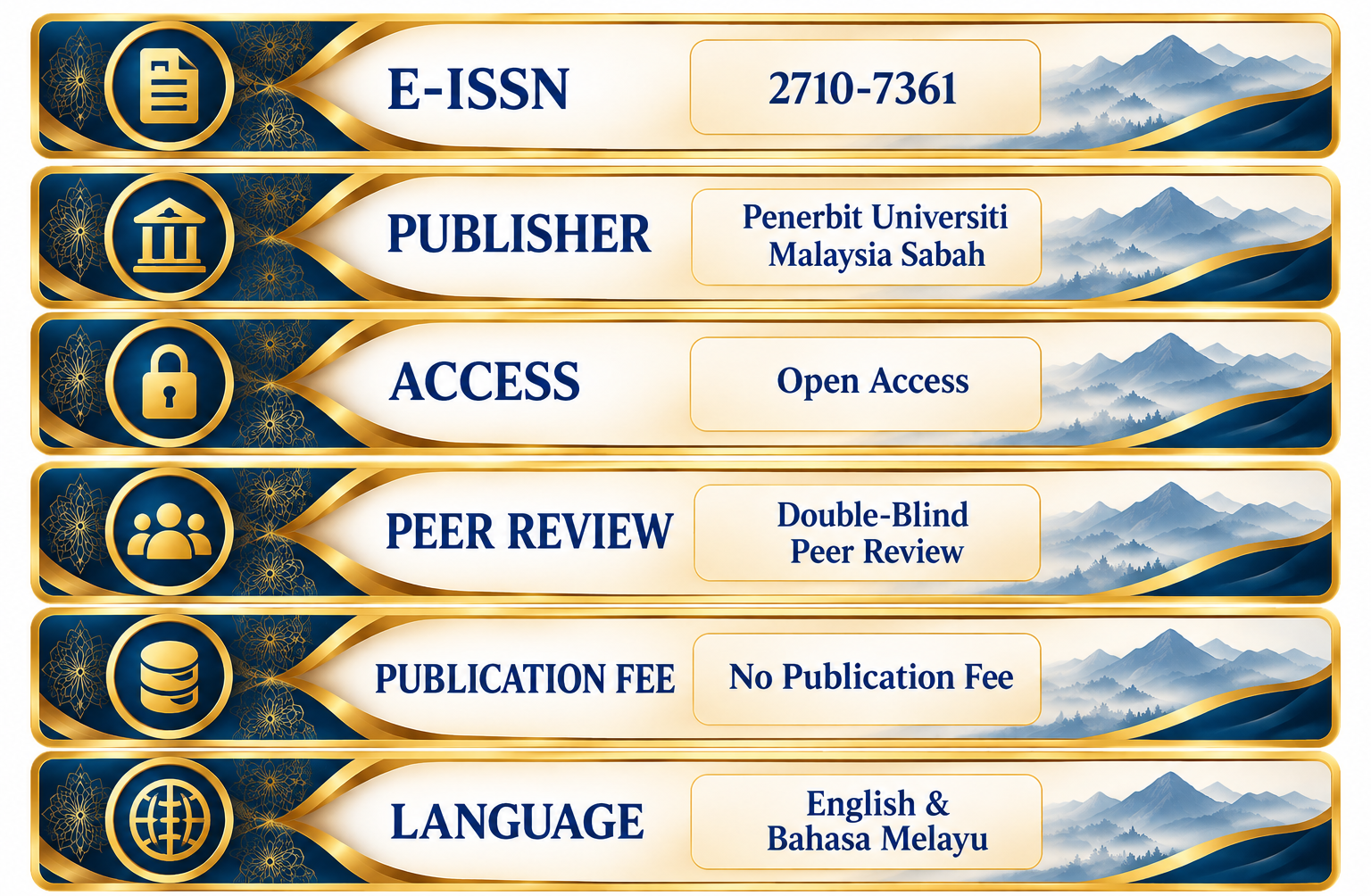
- The manuscript is written in English or Bahasa Melayu.
- The manuscript has been carefully proofread for language, clarity, coherence, and academic presentation.
- All authors have approved the final manuscript and agreed to its submission to BIJE.
- All relevant ethical, funding, and conflict-of-interest information is accurately disclosed.
2. Manuscript Structure
Manuscripts should be organised clearly and systematically. Depending on the nature of the study, the manuscript should generally include the following sections:
- Title – Clear, concise, and representative of the study.
- Abstract – A concise summary of the purpose, methodology, key findings, and implications of the study.
- Keywords – Relevant terms that accurately represent the main focus of the manuscript.
- Introduction – Background, research problem, rationale, objectives, and significance of the study.
- Literature Review / Theoretical Framework – Relevant literature and theoretical or conceptual foundations underpinning the study, where applicable.
- Methodology – Research design, participants or data sources, instruments, procedures, data analysis, and ethical considerations.
- Results / Findings – Clear presentation of the main findings.
- Discussion – Interpretation of the findings in relation to relevant literature, theory, and the wider educational context.
- Conclusion – Key conclusions, implications, limitations, and recommendations where appropriate.
- References – Complete list of all sources cited in the manuscript.
The structure may be adapted where appropriate for review, conceptual, theoretical, or other scholarly articles.
3. Abstract and Keywords
The manuscript should include an informative and concise abstract that clearly presents the essential elements of the study.
- The abstract should briefly state the purpose, methodology, key findings, and main implications of the study.
- Avoid citations, unexplained abbreviations, tables, and figures in the abstract.
- Provide 3–5 keywords that accurately represent the main themes of the manuscript.
- Keywords should be specific and useful for indexing and discoverability.
4. Formatting Requirements
Authors should ensure that the manuscript is prepared consistently and professionally.
- Use clear and consistent headings and subheadings throughout the manuscript.
- Tables and figures should be numbered consecutively, appropriately titled, and referred to in the main text.
- Abbreviations should be defined when first used.
- Use consistent spelling and terminology throughout the manuscript.
- All in-text citations must correspond with entries in the reference list.
- Authors should carefully check the manuscript for grammatical, typographical, and formatting errors before submission.
5. Referencing Style
Authors are responsible for ensuring the accuracy and consistency of all citations and references.
- References should follow the APA referencing style consistently throughout the manuscript.
- All sources cited in the text must appear in the reference list, and all references listed must be cited in the text.
- Authors should prioritise relevant, credible, and up-to-date scholarly sources.
- Where available, the DOI should be provided for journal articles and other scholarly publications.
- Authors are responsible for verifying the accuracy of authors' names, publication years, titles, journal information, page numbers, and DOI details.
6. Tables and Figures
Tables and figures should be used only where they contribute meaningfully to the presentation and interpretation of the research.
- Tables and figures should be numbered consecutively according to their appearance in the manuscript.
- Each table and figure must have a clear and informative title.
- All tables and figures must be referred to in the main text.
- Notes and sources should be provided where necessary.
- Authors are responsible for obtaining permission to reproduce copyrighted tables, figures, images, or other materials where required.
- Tables and figures should be clear, readable, and of sufficient quality for publication.
7. Double-Blind Peer Review and Anonymisation
BIJE adopts a double-blind peer-review process, in which the identities of both authors and reviewers are concealed during the review process.
To maintain anonymity, authors should ensure that:
- Authors' names, affiliations, email addresses, and other identifying information are removed from the manuscript file submitted for review.
- Author information should be entered separately in the OJS submission metadata.
- Self-citations should be written in a manner that does not unnecessarily reveal the identity of the authors.
- Acknowledgements, funding information, institutional identifiers, or other information that may reveal authorship should be removed from the manuscript for review and provided separately where appropriate.
- File properties and document metadata should be checked and cleared of identifying author information before submission.
The complete author information and relevant acknowledgements may be restored to the manuscript following acceptance for publication.
8. Research Ethics
Authors are responsible for ensuring that their research complies with appropriate ethical standards and institutional requirements.
- Research involving human participants should obtain appropriate ethical approval where required.
- Authors should obtain informed consent from participants where applicable.
- The manuscript should clearly state relevant ethical approval or consent information where required.
- Participants' privacy, confidentiality, and anonymity must be appropriately protected.
- Research data must be collected, analysed, and reported honestly and responsibly.
- Fabrication, falsification, plagiarism, and other forms of research misconduct are strictly prohibited.
9. Conflict of Interest and Funding
Authors must disclose any circumstances that could potentially influence, or be perceived to influence, the research or its interpretation.
- Any potential conflict of interest should be clearly declared.
- All sources of research funding or financial support should be appropriately acknowledged.
- Where there is no conflict of interest or external funding, authors should provide an appropriate statement indicating this.
10. Submission Checklist
Before completing a submission to BIJE, authors should ensure that:
- The manuscript is within the aims and scope of BIJE.
- The manuscript has not been previously published and is not under consideration by another journal.
- The manuscript has been prepared according to the BIJE Author Guidelines.
- The manuscript has been appropriately anonymised for double-blind peer review.
- All references cited in the manuscript are included in the reference list, and all references listed are cited in the text.
- Tables and figures are appropriately numbered, titled, and cited in the manuscript.
- Ethical approval and informed consent statements are included where applicable.
- Funding information and potential conflicts of interest are appropriately disclosed.
- The manuscript has been carefully proofread before submission.
- All required information has been accurately entered into the OJS submission metadata.
11. Make a Submission
Authors who have completed the manuscript preparation and submission requirements are invited to submit their manuscripts through the BIJE online submission system.
Before proceeding, authors should ensure that the manuscript and all required information comply with the guidelines provided above.
BIJE welcomes high-quality scholarly contributions from researchers, academics, educators, policymakers, and practitioners worldwide.