Development of EDP.AI: An AI-integrated engineering design module to enhance student engagement in STEM learning
DOI:
https://doi.org/10.51200/bije.v8i1.7097Keywords:
Engineering design process, artificial intelligence, cognitive load theory, design-based learning, rural STEM education, Proses reka bentuk kejuruteraan, kecerdasan buatan, teori beban kognitif, pembelajaran berasaskan reka bentuk, pendidikan STEM luar bandarAbstract
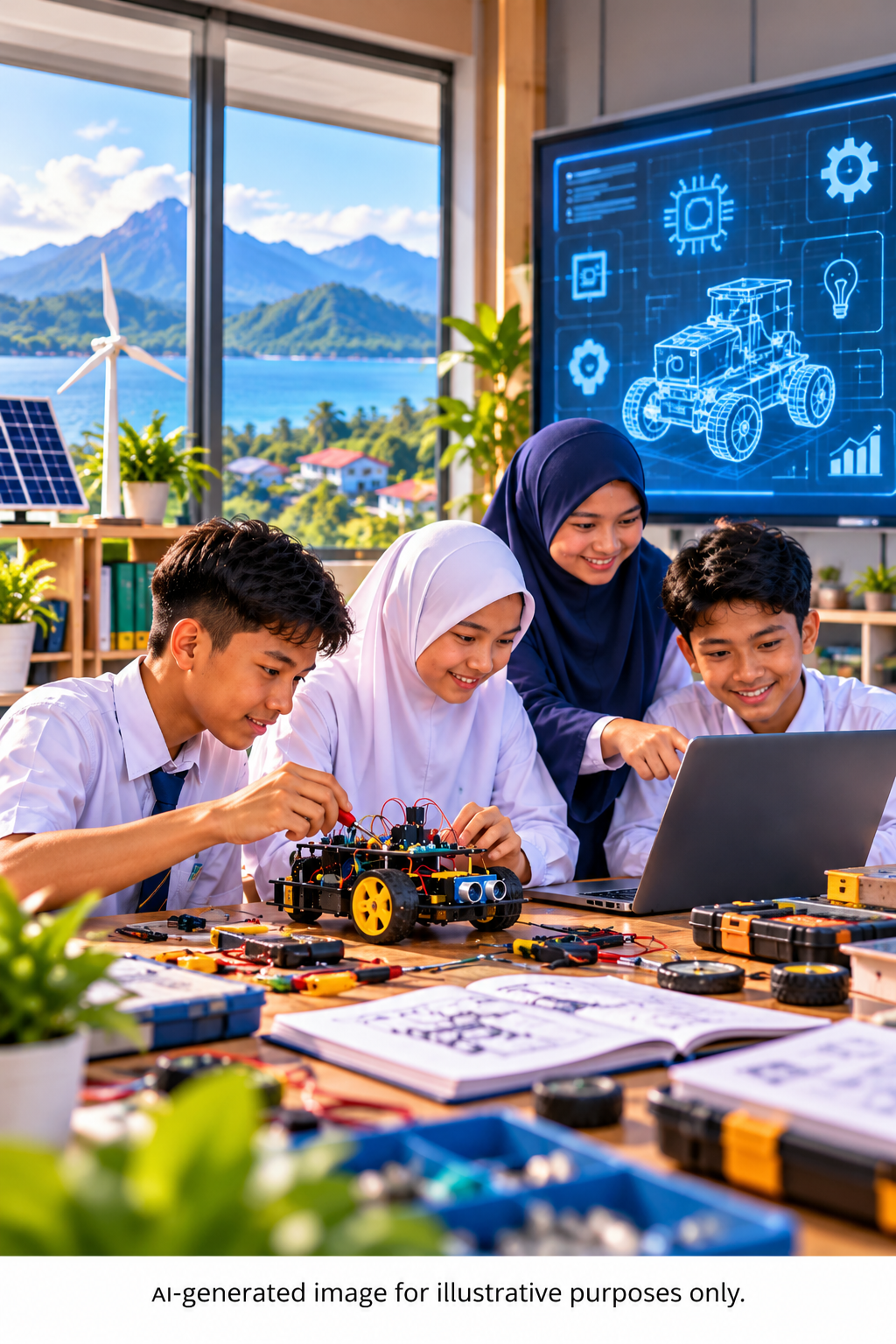
STEM education is a national priority in Malaysia; however, clear gaps in learning outcomes and student participation remain, particularly in rural areas. In Sabah, very low Indeks STEM Murid (ISM) scores, coupled with declining enrolment in the STEM Package A stream, indicate persistent challenges in the quality and continuity of STEM learning at the lower secondary level. These trends suggest that many students do not experience STEM learning as sufficiently meaningful or structured to build confidence and sustain their interest in STEM pathways. This paper reports Phase 1A of a Design and Development Research (DDR) study, focusing on the needs analysis and conceptualisation of EDP.AI, an AI-assisted module designed to scaffold the Engineering Design Process (EDP) for lower secondary students in rural Sabah. Document analysis was conducted to examine challenges related to STEM learning, EDP implementation, artificial intelligence in education, and Cognitive Load Theory (CLT) in low-resource contexts. The evidence was synthesised using design rationale mapping to translate theoretical and contextual insights into actionable design decisions. The outcomes of Phase 1A include the identification of key needs and challenges, the formulation of preliminary design requirements and design principles, and the development of a conceptual model to guide the design of EDP.AI. The proposed module emphasises step-by-step scaffolding aligned with EDP stages, reduced cognitive load, low-bandwidth accessibility, and support for both student reasoning and teacher workload. Overall, this study provides a theoretical and contextual foundation for the subsequent development and expert validation of EDP.AI to support more meaningful and sustainable STEM learning experiences in rural schools.
References
Ahmad, R., Samsudin, M., & Amzah, F. (2021). Kesan modul pendekatan pemikiran reka bentuk kelab STEM kepada kemahiran berfikir aras tinggi (KBAT). Jurnal Pendidikan Malaysia (Malaysian Journal of Education), 46(1SI), 62–73. https://doi.org/10.17576/JPEN-2021-46.01SI-07
Arnab, S., Masters, A., Purnomo, R. A., Mahon, D., & Minoi, J. L. (2025). Playful and frugal learning design: A value-based approach to inclusive and sustainable STEM education. Social Sciences & Humanities Open, 12, Article 101923. https://doi.org/10.1016/j.ssaho.2025.101923
Batan, A. N., & Jamaludin, K. (2022). Cabaran mengaplikasi kaedah e-pembelajaran di sekolah luar bandar semasa pandemik Covid-19: Dari perspektif guru. Jurnal Dunia Pendidikan, 4(3), 1–11. https://doi.org/10.55057/jdpd.2022.4.3.1
Bybee, R. W. (2011). Scientific and engineering practices in K-12 classrooms: Understanding a framework for K-12 science education. Science and Children, 49(4), 10–16.
Chiu, T. K. F., Ahmad, Z., Ismailov, M., & Sanusi, I. T. (2024). What are artificial intelligence literacy and competency? A comprehensive framework to support them. Computers and Education Open, 6, Article 100171. https://doi.org/10.1016/j.caeo.2024.100171
Crompton, H., & Burke, D. (2023). Artificial intelligence in higher education: The state of the field. International Journal of Educational Technology in Higher Education, 20, Article 22. https://doi.org/10.1186/s41239-023-00392-8
Cunningham, C. M., & Carlsen, W. S. (2014). Teaching engineering practices. Journal of Science Teacher Education, 25(2), 197–210. https://doi.org/10.1007/s10972-014-9380-5
El Fathi, T., Saad, A., Larhzil, H., Lamri, D., & al Ibrahmi, E. M. (2025). Integrating generative AI into STEM education: Enhancing conceptual understanding, addressing misconceptions, and assessing student acceptance. Disciplinary and Interdisciplinary Science Education Research, 7, Article 25. https://doi.org/10.1186/s43031-025-00125-z
Elsen, J. V., Buckers, L., van Tricht, C., Torbeyns, J., & de Maeyer, S. (2025). PROSPER: A comprehensive, valid, and reliable instrument to observe problem-solving behaviours in preschoolers. Thinking Skills and Creativity, 58, Article 101940. https://doi.org/10.1016/j.tsc.2025.101940
Fayzullina, A. R., Zulfugarzade, T. E., Kondakchyan, N. A., Aytuganova, J. I., Khvatova, M. A., & Kelina, K. G. (2024). A review of STEM education research in BRICS countries: An analysis of research trends. Frontiers in Education, 9, Article 1410069. https://doi.org/10.3389/feduc.2024.1410069
Garg, N., Kaur, A., Ahmad, F., & Dutta, R. (2025). Augmenting education: The transformative power of AR, AI, and emerging technologies. Human Behavior and Emerging Technologies, 2025(1), Article 5681184. https://doi.org/10.1155/hbe2/5681184
Han, C. G. K., Lai, E., & Mohammad Azri Amatan. (2022). Penggunaan aktiviti amali mudah dalam meningkatkan pencapaian murid-murid di sekolah kurang murid luar bandar Sabah. Jurnal Dunia Pendidikan, 4(3), 58–68. https://doi.org/10.55057/jdpd.2022.4.3.6
Hiğde, E., & Aktamış, H. (2022). The effects of STEM activities on students’ STEM career interests, motivation, science process skills, science achievement, and views on STEM education. Thinking Skills and Creativity, 43, Article 101000. https://doi.org/10.1016/j.tsc.2022.101000
Idris, R., & Bacotang, J. (2023). Exploring STEM education trends in Malaysia: Building a talent pool for Industrial Revolution 4.0 and Society 5.0. International Journal of Academic Research in Progressive Education and Development, 12(2), 358–369. https://doi.org/10.6007/ijarped/v12-i2/16825
Idris, R., Govindasamy, P., & Nachiappan, S. (2023). Challenge and obstacles of STEM education in Malaysia. International Journal of Academic Research in Business and Social Sciences, 13(4), 773–780. https://doi.org/10.6007/ijarbss/v13-i4/16676
Ioannou, A., & Gravel, B. E. (2024). Trends, tensions, and futures of maker education research: A 2025 vision for STEM+ disciplinary and transdisciplinary spaces for learning through making. Educational Technology Research and Development, 72(1), 1–14. https://doi.org/10.1007/s11423-023-10334-w
Ismail, M. H., Salleh, M. F. M., & Nasir, N. A. M. (2019). The issues and challenges in empowering STEM on science teachers in Malaysian secondary schools. International Journal of Academic Research in Business and Social Sciences, 9(13), 360–375. https://doi.org/10.6007/IJARBSS/v9-i13/6267
Jaramillo, J. J., & Chiappe, A. (2024). The AI-driven classroom: A review of 21st century curriculum trends. Prospects, 54(3), 645–660. https://doi.org/10.1007/s11125-024-09704-w
Kotovsky, K., Hayes, J. R., & Simon, H. A. (1985). Why are some problems hard? Evidence from the Tower of Hanoi. Cognitive Psychology, 17(2), 248–294. https://doi.org/10.1016/0010-0285(85)90009-X
Liu, J., Loh, L., Ng, E., Chen, Y., Wood, K. L., & Lim, K. H. (2020). Self-evolving adaptive learning for personalized education. In Companion Publication of the 2020 Conference on Computer Supported Cooperative Work and Social Computing (pp. 317–321). Association for Computing Machinery. https://doi.org/10.1145/3406865.3418326
Liu, J., Sun, D., Sun, J., Wang, J., & Yu, P. L. H. (2025). Designing a generative AI enabled learning environment for mathematics word problem solving in primary schools: Learning performance, attitudes and interaction. Computers and Education: Artificial Intelligence, 9, Article 100438. https://doi.org/10.1016/j.caeai.2025.100438
Luo, W., He, H., Liu, J., Berson, I. R., Berson, M. J., Zhou, Y., Yang, L., & Li, H. (2023). Aladdin’s genie or Pandora’s box for early childhood education? Experts chat on the roles, challenges, and developments of ChatGPT. Early Education and Development, 35(4), 654–674. https://doi.org/10.1080/10409289.2023.2214181
McKenney, S., & Reeves, T. C. (2025). Educational design research for relevant & robust scholarship. Journal of Computing in Higher Education, 37(2), 614–638. https://doi.org/10.1007/s12528-025-09456-2
Ministry of Education Malaysia. (2023). Indeks STEM murid 2023.
Ministry of Education Malaysia. (2025). Malaysia education blueprint 2013–2025: Final review report.
Mogavi, R. H., Deng, C., Kim, J. J., Zhou, P., Kwon, Y. D., Metwally, A. H. S., Tlili, A., Bassanelli, S., Bucchiarone, A., Gujar, S., Nacke, L. E., & Hui, P. (2024). ChatGPT in education: A blessing or a curse? A qualitative study exploring early adopters’ utilization and perceptions. Computers in Human Behavior: Artificial Humans, 2(1), Article 100027. https://doi.org/10.1016/j.chbah.2023.100027
Nordlöf, C., Norström, P., Schönborn, K. J., & Hallström, J. (2025). Easier said than done: STEM subject integration through engineering design in Swedish upper secondary school. Canadian Journal of Science, Mathematics and Technology Education, 24(3), 333–347. https://doi.org/10.1007/s42330-025-00348-2
Paas, F., van Gog, T., & Sweller, J. (2010). Cognitive load theory: New conceptualizations, specifications, and integrated research perspectives. Educational Psychology Review, 22(2), 115–121. https://doi.org/10.1007/s10648-010-9133-8
Radloff, J., & Capobianco, B. M. (2020). Elementary teachers’ responsiveness to supporting students’ engineering design feedback. European Journal of Mathematics and Science Education, 1(2), 53–65. https://doi.org/10.12973/ejmse.1.2.53
Rahman, T. F. A., Zakariah, Z., Anuar, N., Noh, Z., & Razak, N. A. (2025). The impact of STEM activities on students’ knowledge and project development skills. International Journal of Research and Innovation in Social Science, 9(1), 3172–3182. https://doi.org/10.47772/IJRISS.2025.9010257
Richey, R. C., & Klein, J. D. (2014). Design and development research: Methods, strategies, and issues (1st ed.). Routledge. https://doi.org/10.4324/9780203826034
Roehrig, G. H., Dare, E. A., Whalen, E. R., & Wieselmann, J. R. (2021). Understanding coherence and integration in integrated STEM curriculum. International Journal of STEM Education, 8, Article 2. https://doi.org/10.1186/s40594-020-00259-8
Samad, N. A., Osman, K., & Nayan, N. A. (2023). Computational thinking through the engineering design process in chemistry education. International Journal of Educational Methodology, 9(4), 771–785. https://doi.org/10.12973/IJEM.9.4.771
Sen, C., Ay, Z. S., & Kiray, S. A. (2021). Computational thinking skills of gifted and talented students in integrated STEM activities based on the engineering design process: The case of robotics and 3D robot modeling. Thinking Skills and Creativity, 42, Article 100931. https://doi.org/10.1016/j.tsc.2021.100931
Sharif, S., Mariappan, M., Talin, R., Singh, S., Singh, B., Nurrahmah, U., Noorhassanah, B., Martin, R. I., & Kiok, K. (n.d.). Pemupukan STEM dalam kalangan pelajar luar bandar.
Sneider, C. I., & Ravel, M. K. (2021). Insights from two decades of P-12 engineering education research. Journal of Pre-College Engineering Education Research, 11(2), Article 5. https://doi.org/10.7771/2157-9288.1277
Sreenivasan, A., & Suresh, M. (2024). Design thinking and artificial intelligence: A systematic literature review exploring synergies. International Journal of Innovation Studies, 8(3), 297–312. https://doi.org/10.1016/j.ijis.2024.05.001
Suherman, S., Vidákovich, T., Mujib, M., Hidayatulloh, H., Andari, T., & Susanti, V. D. (2025). The role of STEM teaching in education: An empirical study to enhance creativity and computational thinking. Journal of Intelligence, 13(7), Article 88. https://doi.org/10.3390/jintelligence13070088
Surianshah, S. (2021). Digital divide in education during COVID-19 pandemic. Jurnal Ekonomi Malaysia, 55(3), 103–112. https://doi.org/10.17576/JEM-2021-5503-07
Sweller, J. (1988). Cognitive load during problem solving: Effects on learning. Cognitive Science, 12(2), 257–285. https://doi.org/10.1016/0364-0213(88)90023-7
Sweller, J. (2011). Cognitive load theory. In J. P. Mestre & B. H. Ross (Eds.), Psychology of learning and motivation (Vol. 55, pp. 37–76). Academic Press. https://doi.org/10.1016/B978-0-12-387691-1.00002-8
United Nations Educational, Scientific and Cultural Organization. (2023). Education and technology development. In Global education monitoring report 2023: Technology in education – A tool on whose terms? (pp. 179–196). UNESCO. https://doi.org/10.54676/UZQV8501
Vieira, M. F., Cropley, D. H., Marrone, R., & Singh, C. (2025). Bridging the gender gap in STEM: The impact of self-beliefs on domain-specific creativity among secondary students. Thinking Skills and Creativity, 58, Article 101929. https://doi.org/10.1016/j.tsc.2025.101929
Yaakob, H., Wahab, M. N. A., Aziz, A. R. A., & Zainun, M. R. M. (2023). Masalah pembelajaran murid sekolah rendah luar bandar dalam mata pelajaran sains (Science learning difficulties among rural primary school students). International Journal of Humanities Technology and Civilization, 8(1), 22–35. https://doi.org/10.15282/ijhtc.v8i1.9400
Yüksel, A. O. (2025). Design-based STEM activities in teacher education and its effect on pre-service science teachers’ design thinking skills. Journal of Science Education and Technology, 34(4), 904–918. https://doi.org/10.1007/s10956-025-10215-2
Zhang, A. (2022). Human computer interaction system for teacher-student interaction model using machine learning. International Journal of Human–Computer Interaction, 1–12. https://doi.org/10.1080/10447318.2022.2115645
Downloads
Published
How to Cite
Issue
Section
License
Copyright (c) 2026 Borneo International Journal of Education (BIJE)

This work is licensed under a Creative Commons Attribution 4.0 International License.
Copyright and Disclaimer
Copyright of all articles published in the Borneo International Journal of Education (BIJE) is held by the journal. The views, interpretations, and conclusions expressed in published articles are solely those of the authors and do not necessarily reflect the views or positions of the Editorial Board, Editorial Advisory Board, publisher, or journal management.
Open Access and Licensing Policy
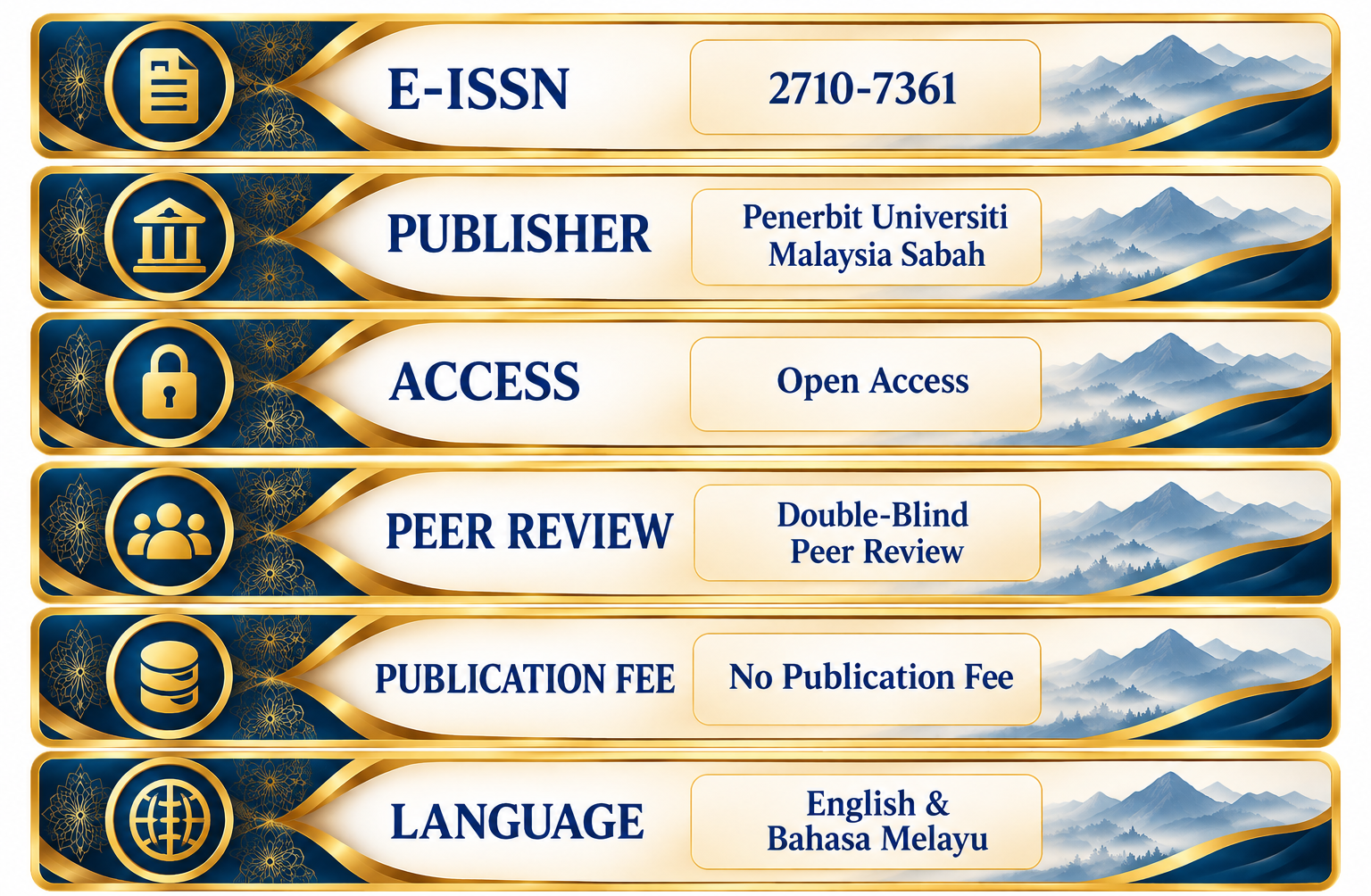
The Borneo International Journal of Education (BIJE) is an open-access journal. All articles are freely available to the public immediately upon publication without subscription or access charges.
Articles are published under the Creative Commons Attribution 4.0 International License (CC BY 4.0). This license permits users to read, download, copy, distribute, share, adapt, and build upon the published material in any medium or format, provided that appropriate credit is given to the original author(s) and source, a link to the license is provided, and any changes made are indicated.
BIJE's open-access policy supports the principles of the Budapest Open Access Initiative (BOAI) and promotes the widest possible dissemination and responsible reuse of scholarly research.




 Total Views: 119
|
 Total Downloads: 23