
Peer Review Process & Timeline
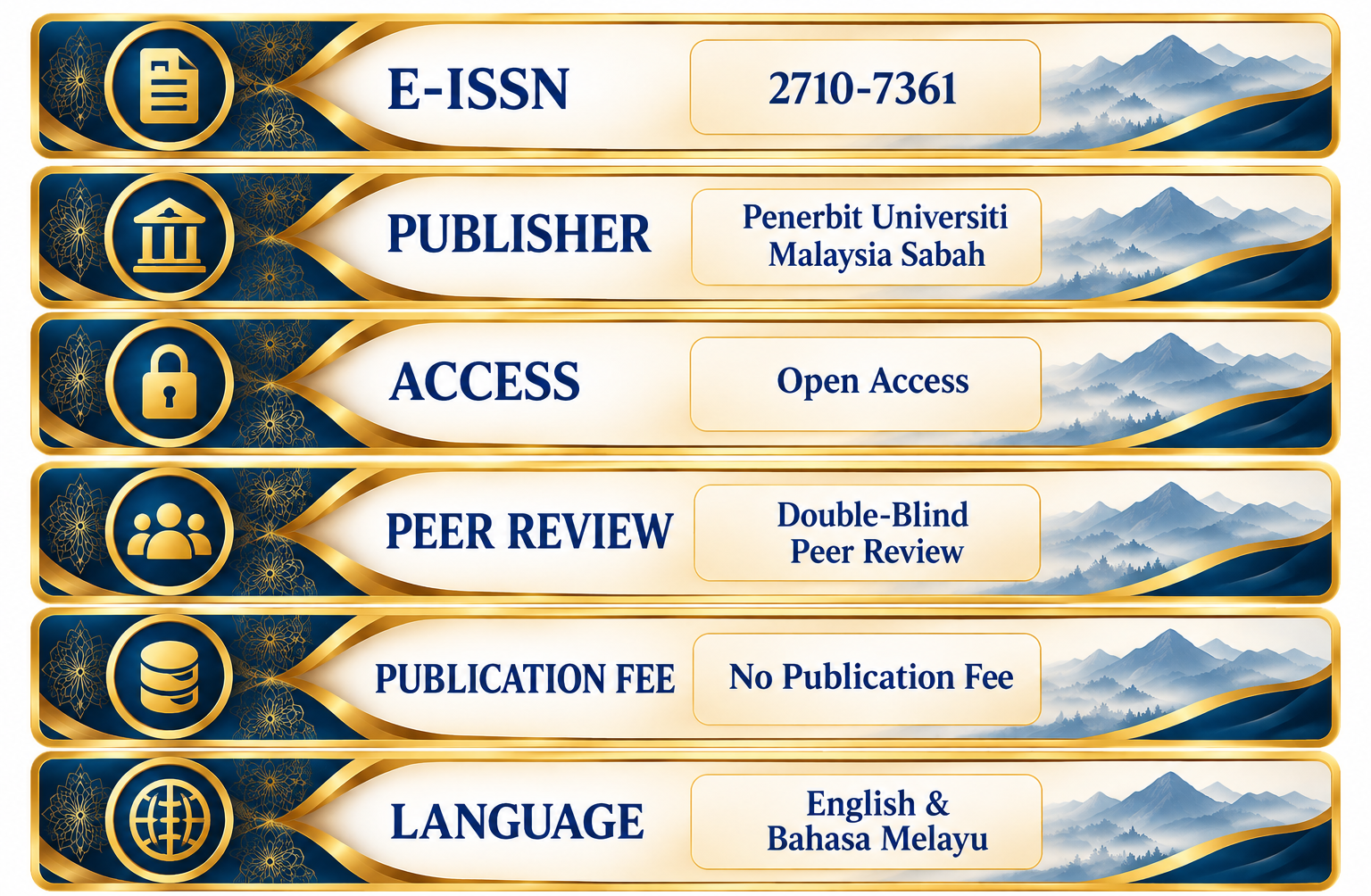
The Borneo International Journal of Education (BIJE) is committed to maintaining high standards of scholarly quality, research integrity, and editorial independence. All research manuscripts submitted to the journal are subject to a double-blind peer review process, in which the identities of both authors and reviewers are concealed from each other throughout the review process.
The peer review process is designed to assess the originality, scholarly contribution, methodological rigour, relevance, clarity, ethical compliance, and significance of submitted manuscripts within the broad field of education.
1. Initial Editorial Screening
Upon submission, each manuscript undergoes an initial screening by the Editorial Office. The manuscript is assessed for:
- alignment with the aims and scope of BIJE;
- compliance with the journal's Author Guidelines and submission requirements;
- completeness and overall presentation of the manuscript;
- relevance and potential contribution to educational scholarship;
- originality and potential concerns relating to plagiarism or inappropriate text similarity; and
- compliance with the journal's publication ethics and research integrity policies.
Manuscripts that are clearly outside the journal's scope, substantially incomplete, or do not meet the journal's minimum scholarly and editorial requirements may be declined at this stage without external peer review.
2. Editorial Assessment
Manuscripts that pass the initial screening are assigned to an appropriate editor for further assessment. The editor evaluates the manuscript's academic merit, originality, conceptual or theoretical contribution, methodological appropriateness, quality of analysis, clarity of presentation, and suitability for external peer review.
The editor may also consider whether the manuscript makes a meaningful contribution to current educational research, policy, practice, or theory.
3. Double-Blind Peer Review
Manuscripts considered suitable for external review are normally evaluated by at least two independent reviewers with relevant expertise in the subject area.
BIJE applies a double-blind review system. Authors' identities and identifying information are concealed from reviewers, while reviewers' identities remain confidential to authors.
Reviewers are expected to provide objective, constructive, and academically justified evaluations addressing.
Reviewers are also expected to declare any potential conflict of interest and to maintain the confidentiality of manuscripts entrusted to them.
4. Editorial Decision
After considering the reviewers' reports and the manuscript's overall scholarly quality, the editor may make one of the following decisions:
- Accept Submission
- Revisions Required
- Resubmit for Review
- Decline Submission
Reviewer recommendations are advisory. The final editorial decision rests with the Editor-in-Chief or the assigned editor, based on the reviewers' evaluations, the quality of the manuscript, and BIJE's editorial standards.
5. Revision and Author Response
Where revisions are required, authors must submit a revised manuscript together with a detailed response to reviewers, indicating how each comment has been addressed.
Where an author does not adopt a particular recommendation, an appropriate academic justification should be provided.
Depending on the extent of the revisions, the revised manuscript may be assessed by the editor or returned to the original or other qualified reviewers for further evaluation.
6. Final Editorial Decision
Following the review of the revised manuscript, the Editor-in-Chief or assigned editor determines whether the manuscript has satisfactorily addressed the reviewers' and editorial requirements.
Acceptance is based on the manuscript's scholarly merit, methodological quality, originality, relevance, ethical compliance, and contribution to the field of education.
Acceptance of a manuscript is not guaranteed by completion of peer review or revision.
7. Editorial Independence and Conflict of Interest
Editorial decisions are made on the scholarly merit of manuscripts without discrimination based on authors' institutional affiliation, nationality, gender, religious background, or other unrelated characteristics.
Editors and reviewers must disclose any circumstances that could constitute a conflict of interest. Where a conflict exists, the manuscript should be reassigned to an appropriate editor or reviewer to preserve the independence and integrity of the evaluation process.
Submissions authored or co-authored by members of the BIJE editorial structure are subject to the same peer-review standards and must be handled independently by an editor who has no involvement or conflict of interest concerning the manuscript.
8. Confidentiality
All submitted manuscripts, reviewer reports, editorial correspondence, and related materials are treated as confidential scholarly documents. Editors and reviewers must not disclose, distribute, or use unpublished information contained in a submitted manuscript for personal or professional advantage.
9. Peer Review Timeline
BIJE seeks to conduct peer review efficiently while maintaining the quality and independence of scholarly assessment. Review timelines may vary depending on reviewer availability, the complexity of the manuscript, the extent of revisions required, and the responsiveness of authors and reviewers.
Authors can monitor the status of their submissions through the journal's online submission system. BIJE prioritises the quality, fairness, and integrity of peer review over accelerated editorial decisions.