STEM in the margins: Exploring preschool teachers’ understanding, challenges, and practices in rural Sabah
DOI:
https://doi.org/10.51200/bije.v8i1.7636Keywords:
STEM education, early childhood education, rural preschool teachersAbstract
Implementing STEM in rural preschools requires teachers to relate disciplinary concepts to young children’s learning within resource-constrained contexts. However, how teachers interpret and implement STEM in these settings remains underexplored. This qualitative case study examined preschool teachers’ understanding of STEM, implementation challenges, and integration strategies in rural Sabah, Malaysia. Three experienced preschool teachers participated in the study. Data were collected through structured interviews and classroom observations documented in field notes and were analysed thematically. Three themes emerged: teachers’ understanding of STEM, implementation challenges, and classroom integration strategies. Teachers perceived STEM as involving questioning, everyday exploration, simple experimentation, and building and construction play. They reported challenges related to teaching materials, pupils’ engagement, administrative demands, and limited preparation time. Teachers also described using hands-on learning, play-based activities, recycled and locally available materials, as well as pictures and real objects when digital resources were unavailable. These findings situate early STEM implementation within teachers’ pedagogical perspectives, professional preparation, and experiences in facilitating learning. The study provides a context-specific understanding of how experienced teachers create STEM-related learning opportunities in rural preschool settings and how these opportunities are shaped by local classroom conditions and available resources. The findings suggest that early childhood STEM education should be supported by appropriate resources and sufficient time for professional learning, while teachers should be encouraged to develop inquiry-based experiences that are relevant to young children’s engagement and responsive to the local classroom context.
References
Abd. Halim, M. I., Mamat, N., & Mohd Radzi, N. M. (2023). Kesediaan mengajar guru prasekolah dalam pengajaran dan pemudahcaraan matematik awal berasaskan STEM: Peranan pengetahuan, minat dan sikap mengajar (Preschool teachers' readiness to teach and facilitate early STEM-based mathematics: The role of knowledge, interest and teaching attitudes). Jurnal Pendidikan Awal Kanak-kanak Kebangsaan, 12(2), 44–58. https://doi.org/10.37134/jpak.vol12.2.4.2023
AlAli, R. (2024). Enhancing 21st century skills through integrated STEM education using project-oriented problem-based learning. GeoJournal of Tourism and Geosites, 53(2), 421–430. https://doi.org/10.30892/gtg.53205-1217
Aleksieva, L., Mirtschewa, I., & Radeva, S. (2021). Preschool teachers’ knowledge, perspectives and practices in STEM education: An interview study. Mathematics and Informatics, 64(6), 617–633. https://doi.org/10.53656/math2021-6-6-pre.
Dai, K. (2025). The digital divide and rural education: A study based on CFPS data. International Theory and Practice in Humanities and Social Sciences, 2(9), 42–53. https://doi.org/10.70693/itphss.v2i9.754
Ghazali, A., Ashari, Z. M., Hardman, J., Omar, R., & Handayani, S. W. (2023). Best practices in STEM education for preschool children: A case study in Malaysia. Sains Humanika, 16(1), 87–99. https://doi.org/10.11113/sh.v16n1.2102
Ghazali, A., Mohamad Ashari, Z., & Hardman, J. (2024). A scoping review on STEM education: The best practices recorded through previous studies in early childhood education setting. International Journal of Education in Mathematics, Science and Technology, 12(3), 810–835. https://doi.org/10.46328/ijemst.3880
Ho, T. E., & Pang, V. (2024). Outcomes of an integrated STEM with design thinking module on preschoolers’ engineering practices. EURASIA Journal of Mathematics, Science and Technology Education, 20(4), em2431.
Idris, R., Bacotang, J., Govindasamy, P., & Nachiappan, S. (2023). Empowering minds: Harnessing the potential of cognitive field independence and dependence in STEM education. International Journal of Academic Research in Business and Social Sciences, 13(9), 1504–1514. https://doi.org/10.6007/IJARBSS/v13-i9/17955
Idris, R., Govindasamy, P., & Nachiappan, S. (2023). Trends and considerations of self-efficacy of STEM education in Malaysia. International Journal of Advanced Research in Education and Society, 5(1), 208–215.
Jiwarathnam, S., & Karpudewan, M. (2026). STEM teacher professional development in rural primary schools: A lesson planning approach using model of educational reconstruction. Malaysian Online Journal of Educational Sciences, 14(1), 1–18.
Joseph, O. B., & Uzondu, N. C. (2024). Bridging the digital divide in STEM education: Strategies and best practices. Engineering Science & Technology Journal, 5(8), 2435–2453. https://doi.org/10.51594/estj.v5i8.1378
Lal Chan, F., & Mohamad Hapni Joblie, F. S. (2025). Teaching STEM with meaning: Digital pedagogical practices in Malaysian TVET. Jurnal Pemikir Pendidikan, 13(1), 328–339. https://doi.org/10.51200/jpp.v13i1.7098
Leung, W. M. V. (2023). STEM education in early years: Challenges and opportunities in changing teachers’ pedagogical strategies. Education Sciences, 13(5), 490. https://doi.org/10.3390/educsci13050490
Ling, L. S., Pang, V., & Lajium, D. (2020). A Case study of teachers’ pedagogical content knowledge in the implementation of integrated STEM education. Jurnal Pendidikan Sains Dan Matematik Malaysia, 10(1), 49–64. https://doi.org/10.37134/jpsmm.vol10.1.6.2020
Maja, M. M. (2023). Teachers’ perceptions of integrating technology in rural primary schools to enhance the teaching of English first additional language. Journal of Curriculum Studies Research, 5(1), 95–112. https://doi.org/10.46303/jcsr.2023.8
Marzuki, O. F., Teo, E. Y. L., Abdullah, W. N. Z. Z. @., Khairuddin, N., Inai, N. H., Saad, J. M., Aziz, M. H. A., & Asmawi, N. N. M. (2026). STEM education in Malaysia: A systematic review of learning outcomes, student engagement, and workforce readiness in the era of Industry 4.0. OALib, 13(03), 1–19. https://doi.org/10.4236/oalib.1115044
Ministry of Science, Technology and Innovation [MOSTI]. (2021). National Science, Technology and Innovation Policy (NSTIP) 2021–2030.
Mohammed, A. H., Nigussie, B., Schellens, T., & Rotsaert, T. (2026). Play-based learning in early childhood education: A scoping review. Early Childhood Education Journal. https://doi.org/10.1007/s10643-026-02127-6
Nasir, M. A., Talib, R., Noor, M. M., & Mohamad, M. (2025). Enhancing 21st-century teaching: A study on technology integration in STEM classrooms across Malaysia’s Southern zone. International Journal of Research and Scientific Innovation, 12(10), 3715–3727. https://doi.org/10.51244/ijrsi.2025.1210000320
National Research Council. (2011). Successful K-12 Stem education: Identifying effective approaches in science, technology, engineering, and mathematics. National Academies Press.
Photo, P. (2026). Empowering rural STEM teachers in indigenous knowledge and technology integration: A Qualitative longitudinal study. African Journal of Research in Mathematics Science and Technology Education, 1–15. https://doi.org/10.1080/18117295.2025.2597717
Rethinam, K. (2024). Teacher-readiness in STEM teaching in selected preschools. ResearchGate. https://doi.org/10.13140/RG.2.2.29277.22249
Rusmin, L., Misrahayu, Y., Pongpalilu, F., Radiansyah, R., & Dwiyanto, D. (2024). Critical thinking and problem-solving skills in the 21st century. Join Journal of Social Science, 1(5), 144–162. https://doi.org/10.59613/svhy3576
Salahova, A. (2023). Unleashing young minds: Fostering scientific thinking in early childhood (ages 5-9) through experiential learning in kids science labs (STEM): Evaluation and assessment. European Journal of Behavioral Sciences. https://doi.org/10.33422/ejbs.v6i4.1105.
Selwyn, N. (2004). Reconsidering political and popular understandings of the digital divide. New Media & Society, 6(3), 341–362. https://doi.org/10.1177/1461444804042519
Tan, H., & Kidman, G. (2025). Twenty-first century skills and STEM education: A review of literature. In Knowledge Generation in STEM and STEAM Education (pp. 127–173). https://doi.org/10.1007/978-3-032-03247-8_5
Thibaut, L., Knipprath, H., Dehaene, W., & Depaepe, F. (2018). Teachers’ attitudes toward teaching integrated STEM: The impact of personal background characteristics and school context. International Journal of Science and Mathematics Education, 17(5), 987–1007. https://doi.org/10.1007/s10763-018-9898-7
UNESCO. (2025, February 13). Early childhood care and education. https://www.unesco.org/en/early-childhood-education/need-know
Wan, Z., Jiang, Y., & Zhan, Y. (2020). STEM education in early childhood: A review of empirical studies. Early Education and Development, 32, 940-962. https://doi.org/10.1080/10409289.2020.1814986.
Wang, L., & Mihai, A. (2024). Integrated STEM education in early childhood classrooms: Voices from the field. Early Childhood Education Journal, 53, 2783 - 2793. https://doi.org/10.1007/s10643-024-01794-7.
Yabaş, D., & Abanoz, T. (2024). Developing teachers’ integrated STEM education knowledge and lesson planning skills: A professional development model for preschool and primary school teachers. Journal of Education and Future. https://doi.org/10.30786/jef.1404946.

Downloads
Published
How to Cite
Issue
Section
License
Copyright (c) 2026 Borneo International Journal of Education (BIJE)

This work is licensed under a Creative Commons Attribution 4.0 International License.
Copyright and Disclaimer
Copyright of all articles published in the Borneo International Journal of Education (BIJE) is held by the journal. The views, interpretations, and conclusions expressed in published articles are solely those of the authors and do not necessarily reflect the views or positions of the Editorial Board, Editorial Advisory Board, publisher, or journal management.
Open Access and Licensing Policy
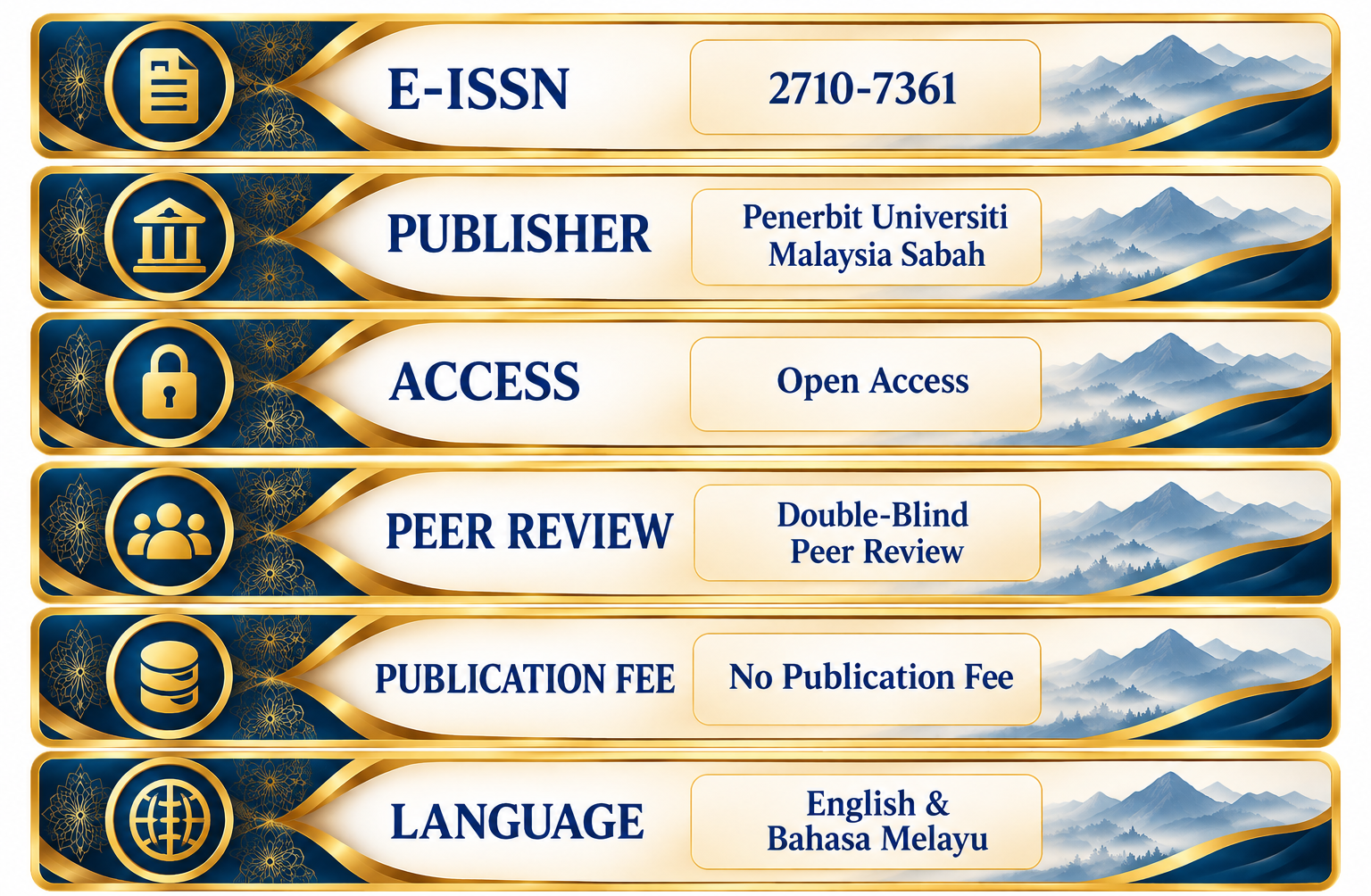
The Borneo International Journal of Education (BIJE) is an open-access journal. All articles are freely available to the public immediately upon publication without subscription or access charges.
Articles are published under the Creative Commons Attribution 4.0 International License (CC BY 4.0). This license permits users to read, download, copy, distribute, share, adapt, and build upon the published material in any medium or format, provided that appropriate credit is given to the original author(s) and source, a link to the license is provided, and any changes made are indicated.
BIJE's open-access policy supports the principles of the Budapest Open Access Initiative (BOAI) and promotes the widest possible dissemination and responsible reuse of scholarly research.




 Total Views: 132
|
 Total Downloads: 54