Penerokaan dimensi efikasi kendiri guru dalam pengajaran tilawah al-Quran: Suatu analisis konseptual
Exploring the dimensions of self-efficacy in the context of al-Quran tilawah teaching: A conceptual analysis
DOI:
https://doi.org/10.51200/bije.v8i1.8633Keywords:
Self-efficacy, teaching of al-Quran recitation, Bandura's self-efficacy theory, al-Ghazali's perspective, Islamic education, Efikasi kendiri, pengajaran tilawah al-Quran, teori efikasi kendiri Bandura, perspektif al-Ghazali, pendidikan IslamAbstract
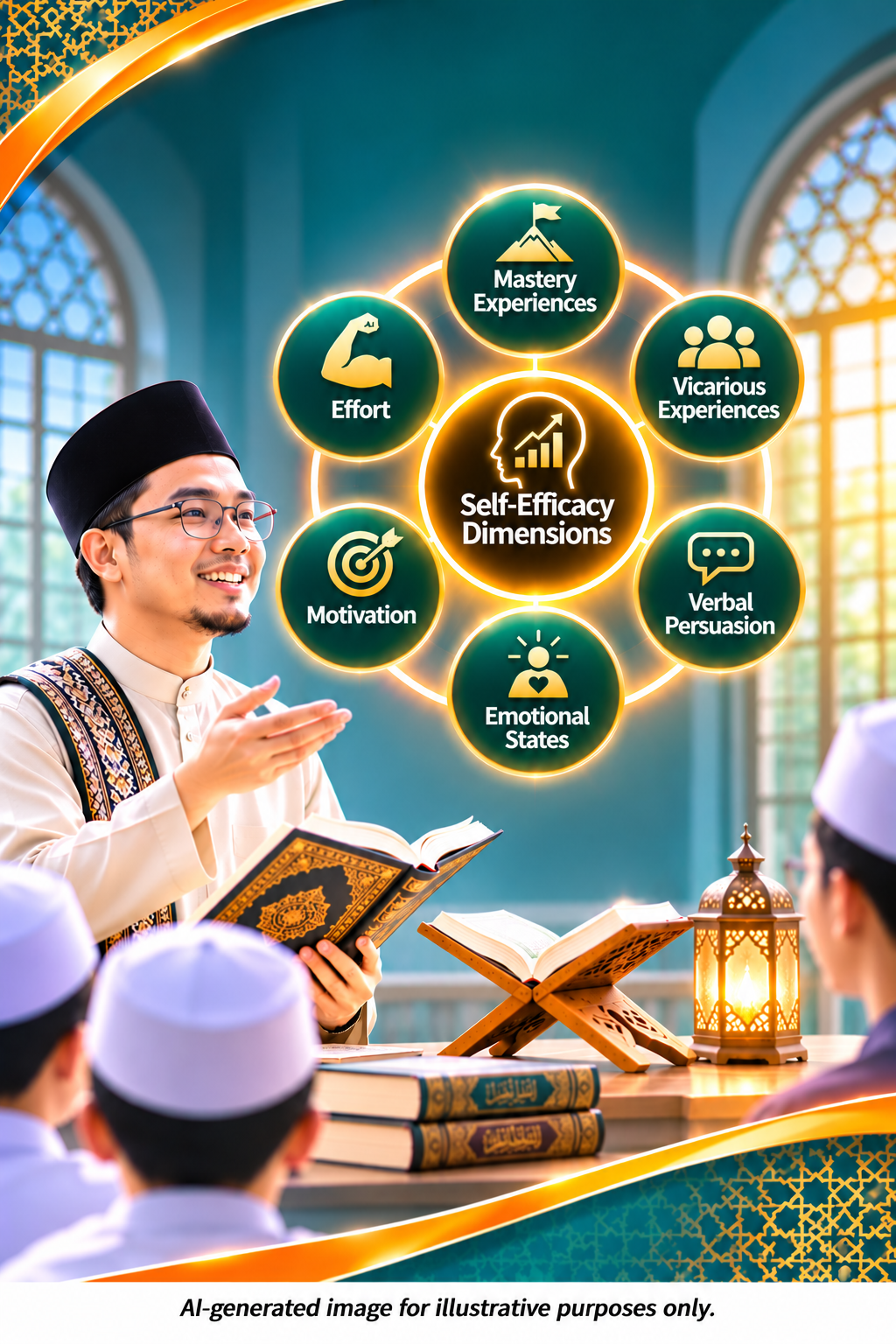
Teacher self-efficacy plays a crucial role in the teaching of Tilawah Al-Quran (Quranic recitation), yet a knowledge gap remains regarding the specific dimensions of self-efficacy within this context. Therefore, this conceptual study aims to identify the dimensions of teacher self-efficacy in teaching Tilawah Al-Quran by integrating Bandura’s (1997) self-efficacy theory and Al-Ghazali’s (1988) perspective. Through conceptual analysis, six dimensions were identified: mastery experiences, vicarious experiences, verbal persuasion, emotional states, motivation, and effort. Based on these dimensions, a conceptual model illustrating the relationships among the dimensions of teacher self-efficacy is proposed. This model incorporates both Bandura’s self-efficacy theory and Al-Ghazali’s perspective, emphasizing the importance of cognitive, affective, and spiritual factors in shaping teacher self-efficacy. Integrating these two perspectives produces a more holistic and relevant theoretical framework for understanding teacher self-efficacy within the context of Islamic Education. The findings of this study carry significant implications for self-efficacy theory and the instructional practice of Tilawah Al-Quran, while paving the way for further research that integrates self-efficacy theory with Islamic perspectives and values in a broader educational context.
Efikasi kendiri guru memainkan peranan penting dalam pengajaran Tilawah Al-Quran, namun masih terdapat jurang pengetahuan berkaitan dimensi-dimensi efikasi kendiri yang khusus dalam konteks ini. Oleh itu, kajian konseptual ini bertujuan untuk mengenal pasti dimensi-dimensi efikasi kendiri guru dalam pengajaran Tilawah Al-Quran dengan menggabungkan teori efikasi kendiri Bandura (1997) dan perspektif Al-Ghazali (1988). Melalui analisis konseptual, enam dimensi telah dikenal pasti: pengalaman, pengalaman tidak langsung, pujukan lisan, keadaan emosi, motivasi, dan usaha. Berdasarkan dimensi-dimensi ini, satu model konseptual yang menggambarkan hubungan antara dimensi-dimensi efikasi kendiri guru dicadangkan. Model ini mengambil kira perspektif teori efikasi kendiri Bandura dan perspektif Al-Ghazali, yang menekankan kepentingan faktor kognitif, afektif, dan spiritual dalam pembentukan efikasi kendiri guru. Integrasi kedua-dua perspektif ini menghasilkan kerangka teori yang lebih holistik dan relevan untuk memahami efikasi kendiri guru dalam konteks Pendidikan Islam. Dapatan kajian ini mempunyai implikasi penting terhadap teori efikasi kendiri dan amalan pengajaran Tilawah Al-Quran, serta membuka ruang untuk penyelidikan lanjutan yang mengintegrasikan teori efikasi kendiri dengan perspektif dan nilai-nilai Islam dalam konteks pendidikan secara lebih meluas.
References
Ainimazita Mansor. (2016). Hubungan antara kepimpinan kendiri dan efikasi kendiri dengan gelagat kewarganegaraan organisasi guru. Jurnal Pendidikan, 148, 148–162.
Bandura, A. (1997). Self-efficacy: The exercise of control. W.H. Freeman and Company.
Braun, V., & Clarke, V. (2006). Using thematic analysis in psychology. Qualitative Research in Psychology, 3(2), 77–101. https://doi.org/10.1191/1478088706qp063oa
Chizhik, E. W., Chizhik, A. W., Close, C., & Gallego, M. (2018). Developing student teachers' teaching self-efficacy through Shared Mentoring in Learning Environments (SMILE). International Journal of Mentoring and Coaching in Education, 7(1), 35–53. https://doi.org/10.1108/IJMCE-02-2017-0014
Hagenauer, G., Hascher, T., & Volet, S. E. (2015). Teacher emotions in the classroom: Associations with students' engagement, classroom discipline and the interpersonal teacher-student relationship. European Journal of Psychology of Education, 30(4), 385–403. https://doi.org/10.1007/s10212-015-0250-0
Haswani Dzul, Zaharah Hussin, & Abdul Muhsien Sulaiman. (2021). Kesan kepercayaan dan efikasi kendiri ke atas pengajaran Pendidikan Islam berintegrasikan KBAT di Malaysia: Satu analisis multilevel. Malaysian Journal of Social Sciences and Humanities, 6(12), 80–93. https://doi.org/10.47405/mjssh.v6i12.1180
Imam al-Ghazali. (1988). Ihya’ Ulumuddin (Jilid 4, Terj. Prof. T. K. H. Ismail Yakub). Pustaka Nasional PTE LTD.
Morris, D. B., Usher, E. L., & Chen, J. A. (2017). Reconceptualizing the sources of teaching self-efficacy: A critical review of emerging literature. Educational Psychology Review, 29(4), 795–833. https://doi.org/10.1007/s10648-016-9378-y
Muhammad Adib, & Jamayah Lasot. (2023). Tahap efikasi kendiri guru pelatih Pendidikan Islam IPGKTAR dengan amalan pembelajaran Abad Ke-21 semasa praktikum. Prosiding Penyelidikan Pendidikan Islam (PPPI) IPGKTAR 2023, 1, 87–92.
Musliza Jusoh, & Siti Noor Ismail. (2021). The relationship between self-efficacy and teacher work commitment in moderate performing schools in Kelantan. International Journal of Education, Psychology and Counseling, 6(40), 264–273. https://doi.org/10.35631/ijepc.640022
Nishimura, T., & Sakurai, S. (2017). Longitudinal changes in academic motivation in Japan: Self-determination theory and East Asian cultures. Journal of Applied Developmental Psychology, 48, 42–48. https://doi.org/10.1016/j.appdev.2016.11.004
Nor Asmawati Ismail, & Najihah Abd. Wahid. (2018). Sorotan al-Quran terhadap efikasi kendiri. Prosiding Seminar Antarabangsa Al-Quran Dalam Masyarakat Kontemporari 2018, 271–276. http://www.fki.unisza.edu.my
Norhannan Ramli, & Hafizhah Zulkifli. (2022). Tahap kesediaan dan motivasi guru Pendidikan Islam terhadap pengajaran dan pembelajaran atas talian. International Journal of Advanced Research in Islamic Studies and Education (ARISE), 2(2), 16–30.
Nuraisyah Muhammad, & Faridah Mydin Kutty. (2021). Hubungan antara pembelajaran regulasi kendiri dan motivasi terhadap pencapaian akademik. Malaysian Journal of Social Sciences and Humanities, 6(9), 215–229. https://doi.org/10.47405/mjssh.v6i9.1006
Salbiah Mohamed Salleh, Mohd Aderi Che Noh, & Aminudin Hehsan. (2017). Profil akhlak guru Pendidikan Islam di Malaysia. UMRAN – International Journal of Islamic and Civilizational Studies, 5(1), 80–93. http://jurnalumran.utm.my/index.php/umran
Salifu, I., Alagbela, A. A., & Ofori, C. G. (2018). Factors influencing teaching as a career choice (FIT-Choice) in Ghana. Teaching Education, 29(2), 111–134. https://doi.org/10.1080/10476210.2017.1365360
Stigmar, M. (2016). Peer-to-peer teaching in higher education: A critical literature review. Mentoring & Tutoring: Partnership in Learning, 24(2), 124–136. https://doi.org/10.1080/13611267.2016.1178963
Tschannen-Moran, M., & Hoy, A. W. (2001). Teacher efficacy: Capturing an elusive construct. Teaching and Teacher Education, 17(7), 783–805. https://doi.org/10.1016/S0742-051X(01)00036-1
Valchev, H. I. (2018). What is conceptual analysis? Balkan Journal of Philosophy, 10(2), 131–142. https://doi.org/10.5840/bjp201810215
Visal Moosa, & Mariyam Shareefa. (2019). Implementation of differentiated instruction: Conjoint effect of teachers’ sense of efficacy, perception and knowledge. Anatolian Journal of Education, 4(1), 23–38.
Warwick, P., Vrikki, M., Færøyvik Karlsen, A. M., Dudley, P., & Vermunt, J. D. (2019). The role of pupil voice as a trigger for teacher learning in Lesson Study
professional groups. Cambridge Journal of Education, 49(4), 435–455. https://doi.org/10.1080/0305764X.2018.1556606
Downloads
Published
How to Cite
Issue
Section
License
Copyright (c) 2026 Borneo International Journal of Education (BIJE)

This work is licensed under a Creative Commons Attribution 4.0 International License.
Copyright and Disclaimer
Copyright of all articles published in the Borneo International Journal of Education (BIJE) is held by the journal. The views, interpretations, and conclusions expressed in published articles are solely those of the authors and do not necessarily reflect the views or positions of the Editorial Board, Editorial Advisory Board, publisher, or journal management.
Open Access and Licensing Policy
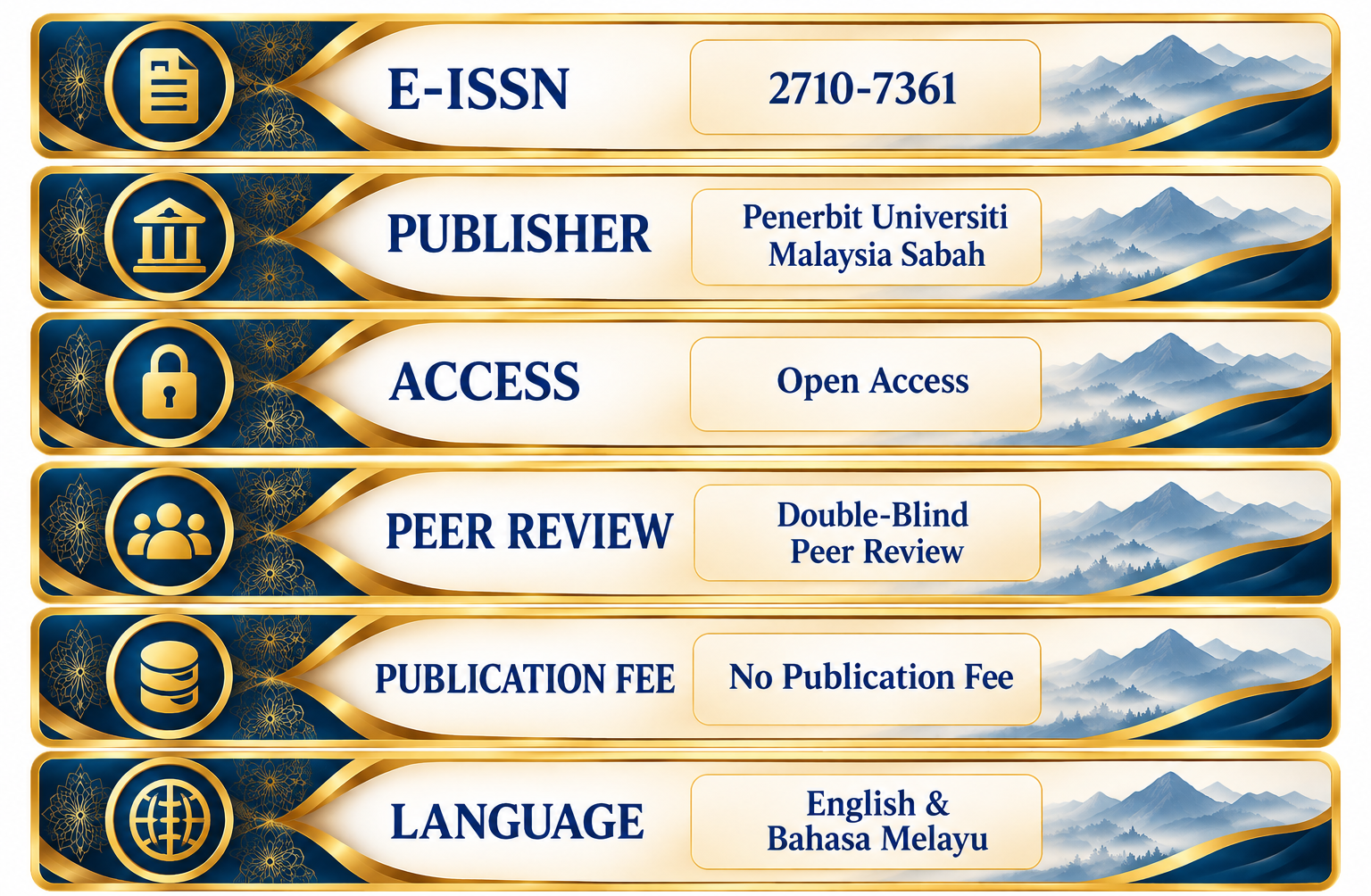
The Borneo International Journal of Education (BIJE) is an open-access journal. All articles are freely available to the public immediately upon publication without subscription or access charges.
Articles are published under the Creative Commons Attribution 4.0 International License (CC BY 4.0). This license permits users to read, download, copy, distribute, share, adapt, and build upon the published material in any medium or format, provided that appropriate credit is given to the original author(s) and source, a link to the license is provided, and any changes made are indicated.
BIJE's open-access policy supports the principles of the Budapest Open Access Initiative (BOAI) and promotes the widest possible dissemination and responsible reuse of scholarly research.




 Total Views: 0
|
 Total Downloads: 0